I recently worked on a very short film with Alan Aranha and Sudhanva Atri. The music was written and perfromed by Rohit Chaturvedi and Illustrator Pia Meenakshi a.k.a Gumani worked on the titles. I present to you, Junction.

Monday, October 29, 2012
Thursday, June 21, 2012
Dubious Lather
 |
| Image taken from: http://dhcwargamesblog.files.wordpress.com/2012/03/3o2ymuot.jpg |
American Television
In the
past, there was always a clear distinction between Film and Television. In most cases, one could distinguish between the two, right from their
appearance. This was due to several factors such as budget, subject
matter, casting, etc. Television was primarily concerned with entertaining the audience, as opposed to film, which was considered more artistic. The narratives it dealt with were not particularly intricate and were not considered very serious.
With
regard to the subject matter, television programming in America
primarily concerned itself with individuals and their lives. Shows
primarily revolved around the characters. There was no clear bigger picture. Two television genres that became hugely popular were the Soap Opera (General Hospital, Day's of Our Lives) and the Sitcom (I Love Lucy, The Brady Bunch, Full House, Seinfeld, Friends).
However, this has changed over time. With respect to the
quality of production, the line between television and film has slowly
been obscured. With cable television slowly gaining prominence, television budgets increased, more
expensive sets were built, prominent Hollywood stars began starring in
and making appearances on TV shows. Apart from the Soap Opera and the Sitcom, the Drama became a popular television genre.
With respect to subject matter, more themes were explored. But it is only with programming such as HBO's 2002 series The Wire and the original C.S.I, that television reached new ground. The shows were not centered around the characters' lives so much as they were around the bigger picture. In
the case of The Wire, it was the way the city of Baltimore functioned -
from the illegal drug trade to the media. These workings were the
highlight of the show and not the characters' personal relationships.
The newest sensation on television is the HBO series Game of Thrones. Passed off as an Epic Fantasy, The
show has received praise from both the public, as well as the critics. Some
are even predicting that it will be a major milestone in television
programming.
The show is set in a parallel universe, on a planet resembling Earth. It
is set in the medieval period and follows the different skirmishes
that
incessantly take place between wealthy noblemen, .
The Premise
 |
| Image taken from: http://www.meh.ro/wp-content/uploads/2011/08/meh.ro8094.jpg |
Game of
Thrones takes place on a massive continent called Westeros. This
continent was initially divided into seven kingdoms and ruled by seven kings.
At some point in time, these kingdoms were conquered and united by
the Targaryen Dynasty and the Iron Throne
was established - putting one king in charge of the entire continent. This is the state of affairs when the show begins.
The
series begins fifteen years after the Targaryens have
been wiped out. The house of Baratheon – a wealthy and powerful family
has
taken the throne. Robert Baratheon is the king. Now, one continent is
far too big for one man to control hence, the kingdom is divided into
several territories - run by different lords who all serve the king. It
is only logical. However, deception runs rampant in Westeros and a
number of these lords prepare to betray the king and take the crown for
themselves. Apart from these lords, there are also others, trying to
capture the throne - namely Daenerys Targaryen, the last surviving
member of the Tragaryen Dynasty. To chronicle the events that have taken
place in the two seasons so far would be a tedious task, simply because
of the number of characters. Besides, it does not serve any purpose
here.
Medieval Soap Opera
Game of Thrones, which is the television adaptation of a series of novels by George R. R. Martin, aims to show a chaotic, medieval, cutthroat world, with everyone looking to get one up on the other. To clearly depict disorder, it becomes essential for a sense of order to be established first. When an entirely new world is crafted, a certain understanding of how it functions must be conveyed in order to show it being dysfunctional. If this is not done, then this new world simply becomes a device to flout the rationale and logic that one would be inherent in the real world. It is simple - Why not set it on planet Earth, during the medieval period? This is simply because medieval Earth already has a history, which would seriously hinder the coining of obscure names for people and places. It would seriously impede the number of fantastic elements they can introduce into the narrative. Setting it in the real world, would put the story into an external frame of reference, making it increasingly difficult for the writer to do as they please. Hence, they take the easy way out and create ANOTHER world, very much LIKE medieval Earth, but NOT medieval Earth. This is not so much the writer's creativity as it is his cunning.
At no point do we see the functioning of the kingdom under the Iron Throne. What about trade? What about industry? What about the economics of Westeros? Where do these rich people get their money from? How do they win public loyalty? The show doesn't even tread anywhere near this territory. There is hardly ANY mention of the public gentry. We are told that these rich people have money and hence, the public of Westeros does what they say. And we do not see how these people are rich. The source of their wealth is never explained. Even where there are explanations provided, it is so banal that it is embarrassing, to say the least.
For example: One of the more prominent houses, the house of Lannister, is said to be the wealthiest house in Westeros. The source of their wealth? They happen to have gold mines on their land!
As far as the common people of Westeros are concerned, we don't know how they are governed. It's a massive continent-kingdom and we never understand how it works. Whoever wants to be king already has a massive army at hand or they manage to procure one fairly easily.
Then why is it so popular? Has the intelligence of the average viewed diminished over time?
As I stated earlier, television was always been viewed as entertainment. However, with its visual quality matching that of mainstream Hollywood cinema, it has begun to be perceived as something more serious. However, perhaps it is the decline of Hollywood that has brought the two closer.
Medieval Soap Opera
Game of Thrones, which is the television adaptation of a series of novels by George R. R. Martin, aims to show a chaotic, medieval, cutthroat world, with everyone looking to get one up on the other. To clearly depict disorder, it becomes essential for a sense of order to be established first. When an entirely new world is crafted, a certain understanding of how it functions must be conveyed in order to show it being dysfunctional. If this is not done, then this new world simply becomes a device to flout the rationale and logic that one would be inherent in the real world. It is simple - Why not set it on planet Earth, during the medieval period? This is simply because medieval Earth already has a history, which would seriously hinder the coining of obscure names for people and places. It would seriously impede the number of fantastic elements they can introduce into the narrative. Setting it in the real world, would put the story into an external frame of reference, making it increasingly difficult for the writer to do as they please. Hence, they take the easy way out and create ANOTHER world, very much LIKE medieval Earth, but NOT medieval Earth. This is not so much the writer's creativity as it is his cunning.
At no point do we see the functioning of the kingdom under the Iron Throne. What about trade? What about industry? What about the economics of Westeros? Where do these rich people get their money from? How do they win public loyalty? The show doesn't even tread anywhere near this territory. There is hardly ANY mention of the public gentry. We are told that these rich people have money and hence, the public of Westeros does what they say. And we do not see how these people are rich. The source of their wealth is never explained. Even where there are explanations provided, it is so banal that it is embarrassing, to say the least.
For example: One of the more prominent houses, the house of Lannister, is said to be the wealthiest house in Westeros. The source of their wealth? They happen to have gold mines on their land!
As far as the common people of Westeros are concerned, we don't know how they are governed. It's a massive continent-kingdom and we never understand how it works. Whoever wants to be king already has a massive army at hand or they manage to procure one fairly easily.
Then why is it so popular? Has the intelligence of the average viewed diminished over time?
As I stated earlier, television was always been viewed as entertainment. However, with its visual quality matching that of mainstream Hollywood cinema, it has begun to be perceived as something more serious. However, perhaps it is the decline of Hollywood that has brought the two closer.
Game
of Thrones follows a trend that is popular with most acclaimed
Hollywood films today. It distracts the viewer and takes their attention
away from all its inadequacies through its use of spectacle. Westeros has been created fairly well. The
costumes, the sets and the shoot-locations are all fairly authentic and
the show is impressive to look at.
To avoid dealing with the bigger picture
of Westeros, what Game of Thrones occupies itself with the personal
lives of its characters and the relationships they build. It explores
themes such as love, revenge, jealousy, betrayal etc. If we were to change
the context from the from the medieval peoriod in a parallel universe to the fashion industry in today's real world - where you just have the head of a
giant fashion conglomerate in place of the Iron Throne. What you are
left with, is The Bold and the Beautiful. Switch the context to a high school and you have Gossip Girl. Game of Thrones is a medieval soap opera that uses large amounts of sex and violence in order to appear otherwise.
Because of
its preoccupation with the personal lives of its characters, the show
falters in places where it absolutely cannot afford to. In depicting
battles. Throughout the show, there is talk of huge armies and massive battles. However, the scale of this is never realized. For instance, the whole of season builds up to a final battle. When this battle actually takes place, it resembles a moderately-sized college gathering. The fight is actually like a schoolyard scuffle.
The Smaller Picture
While it completely ignores the bigger picture, Game of Thrones toils away at unnecessary details - all in service of its authenticity. We see that each House has a motto and an emblem, not to mention a code. The designations of various individuals in court have been specially created for the Iron Throne - we have 'The King's Guard' and 'The Hand of the King' - all this serves absolutely no purpose. They are merely embellishments to draw attention away from the fact that it is a hollow embarrassment.
Opinion: As an afterthought - I believe that fans of Game of Thrones are no different from fans of Gossip Girl. The sense I get, however, is that they believe otherwise. Since this is a blog post, I shall be informal and say - They are all morons.

Tuesday, August 30, 2011
Whispering Dogs
I recently wrote and illustrated a short story for Art House Cooperative's 'Fiction Project. You can view it by clicking here, or by clicking the image below.

Tuesday, May 24, 2011


From Langar Ata to Shakhrisabz
I recently went to Uzbekistan. This is a short video The video is about Shakhrisabz - the birthplace of Amir Temur, their national hero. A short distance away is Langar Ata - A mausoleum located on an eerie hill. The video begins with Langar Ata and makes its way to Shakhrisabz. I have used music by Deru.
Sunday, May 22, 2011
The Chaos of Medieval Bundi
A short film I made from footage I took on a vacation to Rajasthan. I used music by Amon Tobin.

Friday, May 20, 2011
The Yogensha
The Yogensha is a fictitious character that I conceptualized and drew. The purpose of the character was to promote experimental video in the city of Bangalore. With the help of Abhijeet Tambe and Ragul Giri, one aspect of it finally materialized. More information can be found HERE
Below is a document that contains the fictional background of Peeping Tom A.K.A Yogensha
Below is a document that contains the fictional background of Peeping Tom A.K.A Yogensha
Saturday, January 29, 2011
Lectures

I'm writing and illustrating a cartoon strip called Lectures. This is the first one in the series.
Thursday, January 27, 2011
Review - Dhobi Ghat

Poster image sourced from here
Director: Kiran Rao
Cast: Aamir Khan, Monica Dogra, Prateik Babbar, Kriti Malhotra
Rating: 0.5/5
Dhobi Ghat, the much awaited directorial debut of Kiran Rao, is a film that intends to view the city of Bombay through the lives of its protagonists. The film examines the effect of the city on the confluent lives of four characters from different backgrounds.
Characters
Arun
Arun is a successful painter (played by Aamir Khan). He is divorced and his wife and daughter (who never appear in the film) have moved to Australia. Arun is an introvert and plays the 'pensive artist' - something that Aamir Khan attempts to achieve by incessantly scowling and smoking cigarettes. He moves into the former home of Yasmin (one of the other characters), where he finds her undelivered 'video letters' to her brother. Arun plays the brooding enigmatic intellectual. It takes him less than the first ten minutes of the film to get Monica Dogra into bed.
Yasmine
Yasmine is a Muslim girl from Uttar Pradesh (played by Kriti Malhotra) who has come to Bombay after getting married. She is also the previous occupant of Arun's flat. We only see her life through video recordings she makes for her brother (found by Arun). These recordings (video letters) document Yasmine's life, emotions and become the subject of Arun's obsession. Yasmine is innocent, naive, helpless and is the victim of a forced marriage - something that eventually causes her suicide.
Shai
Shai is an investment banker(played by Monica Dogra) based in America. She is on a sabbatical in India. She meets Arun in the beginning of the film. Following a one night stand and a rejection, she grows obsessed with him. Shai is also an aspiring photographer and she spends most of her time taking pictures of the city and (secretly) of Arun. She also becomes the subject of Munna's (Prateik Babbar's character) obsession - whom she befriends in the course of the film in the hope of uncovering information about Arun.
Munna
Zohaib a.k.a Munna, is a Dhobi by day and a rat killer by night. He is also an aspiring actor. Originally from Bihar, he lives in the dhobi ghat, along with his mother and drug-dealing brother - Salim. Munna is both Arun as well as Shai's Dhobi. His acquaintanceship with Arun encourages Shai to befriend him - with whom he falls in love with. However, events through the course of the film make him realize the class difference between him and Shai, forcing him to relinquish the idea of having any sort of future with her.
Dhobi Ghat attempts to depict the city of Bombay through its characters, but all it does is obsess with them instead. This by itself isn't necessarily a flaw. However, Kiran Rao's characters do not do anything even remotely significant, to make us want to watch them. We only know that they're from different backgrounds, because the characters themselves claim so.
Munna, the dhobi from Bihar is familiar with 60s American rock music. His interactions with Shai include watching movies in multiplexes and having drinks on the promenade. Kiran Rao fails to realize that an individual coming from a dhobi background will not blend in with the urbane crowd. When Shai flirts with him, he reads it precisely as flirtation - like a more westernized individual would. From the start of their friendship, Shai looks at Munna longingly, with desire. Considering her encounter with Aamir Khan in the beginning of the film, one would be lead to believe that she is promiscuous. However, there is no romance that occurs between Munna and shai, simply because of his dhobi label. An investment banker from America and a dhobi from Mumbai's dhobi ghat cannot function on the same plain simply because their conflicting backgrounds make them function in completely different ways. They're like apples and oranges. Prateik Babbar's body language and mannerisms are that of an urbane youth. He behaves like an apple, when he's supposed to be an orange. He does not seem the least bit out of place in urban areas such as a multiplex. Moreover, we see Munna indulging in western behaviour such as contemplating holding Shai's hand during a movie - One might argue that the massive influx of western culture into the mainstream could make this possible. However, one s keep in mind that his background makes him an outsider in those surroundings and to perform such an act, one would be required not to be conscious of the happenings around him. To suggest that an individual from the dhobi ghat frequents multiplexes is absurd.
Aamir Khan's character does everything, from painting to scratching his head with the air of a star. He incessantly frowns and tries to appear 'thoughtful'. We see that he is dissatisfied, but we never learn why - as if to say that by default, an artist is always contemplating something of the utmost importance. We never even see these 'important thoughts' materialize into anything - there are no instances where Arun says anything remotely insightful. We only see him haphazardly throwing paint onto a canvas. This is less so because artists generally keep to themselves and more so because Kiran Rao lacks the capacity to script it.
The sub-plot with most promise in the film is Arun's interaction with Yasmine through her video diary. The only significant occurrence in the film is Yasmine's suicide. However, this does not materialize into anything. The fact that Yasmine's video letters to her brother are undelivered is ignored, even after we learn of her suicide. Arun does not make any attempts to deliver the tapes to the brother himself, preventing the story from developing further. All that materializes from Yasmine's suicide, is Arun's new collection of paintings.
Dhobi Ghat has been praised for its camerawork. However, this can only be attributed to the fact that it is unconventional. Yasmine's segments are all shot with a hand-held camera, aching to be called Goddardian. The rest of the film is visually uninteresting, with the camera focusing on the actors, almost completely neglecting Mumbai. Kiran Rao has filmed inside the Dhobi Ghat, but it isn't the Dhobi Ghat that she captures, it's Prateik Babbar pretending to be a dhobi. The films tells us nothing of Mumbai (except for abstractions such as - The air around Marine Drive smells of peoples' desires). Prateik Babbar's character is also a rat killer, but we hardly see him killing any rats. Even instances that have the potential to be visually potent are ruined by the actor-hungry camera, making the film a bland embarrassment.
Sunday, January 9, 2011
Memorable Rock Music from 2010 - Part 1
Deerhunter - Halcyon Digest

This was my first Deerhunter album and I was very impressed to say the least. Categorized by several websites as 'Noise Rock', the band describes itself as 'Ambient Punk' and it could easily strike listeners as...well... incoherent(not so much this album, but their previous work). But it is in this 'noise, in this seeming 'chaos' that the band manages to achieve a strong sense of rhythm. This is done, primarily with incredibly prominent, catchy melodies. When coupled with lead singer Bradford Cox's placid voice, the 'chaos' is, in a sense neutralized, producing some very interesting results. A similar pattern can be seen with Baltimore-based Animal Collective's music as well. While their music is very different, the process of cutting through chaos with melody can is clearly evident.
Arcade Fire - The Suburbs

I believe that this album marks the 'arrival' of Arcade Fire. I've listened to their earlier albums - 'Funeral' and 'Neon Bible'. While neither of them had struck me as something extraordinary, both of them had immense potential and it appears that the band has successfully channeled this potential in 'The Suburbs'. Lyrically, the album is semi-autobiographical and captures the band members' experiences of growing up in the suburbs. Vocalist Win Butler has a melancholy manner of singing, which gives the entire album a haunting tone and a distinct character. On certain songs, his wife - Régine Chassagne takes over with a more lively, energetic manner of singing - something that provides stability to the album and makes it 'complete'.
Beach House - Teen Dream

Once again, this was the first Beach House album I listened to. Victoria Legrand's voice is distinct, with a hint of gruffness, while still keeping true to the ambient nature of Shoegazing and Alex Scally's bell-like guitars support her perfectly. The most striking aspect to Beach House's music is the structure of their melody. Legrand's melodies seem deliberately incomplete, in the sense, she suggests a certain melody and does not complete it, leaving room for the listener to...well... fill in the tiny blanks. This, I find particularly remarkable, simply because it works.
The Suburbs cover image sourced from here
Halcyon Digest cover image sourced from here
Teen Dream cover image sourced from here

This was my first Deerhunter album and I was very impressed to say the least. Categorized by several websites as 'Noise Rock', the band describes itself as 'Ambient Punk' and it could easily strike listeners as...well... incoherent(not so much this album, but their previous work). But it is in this 'noise, in this seeming 'chaos' that the band manages to achieve a strong sense of rhythm. This is done, primarily with incredibly prominent, catchy melodies. When coupled with lead singer Bradford Cox's placid voice, the 'chaos' is, in a sense neutralized, producing some very interesting results. A similar pattern can be seen with Baltimore-based Animal Collective's music as well. While their music is very different, the process of cutting through chaos with melody can is clearly evident.
Arcade Fire - The Suburbs

I believe that this album marks the 'arrival' of Arcade Fire. I've listened to their earlier albums - 'Funeral' and 'Neon Bible'. While neither of them had struck me as something extraordinary, both of them had immense potential and it appears that the band has successfully channeled this potential in 'The Suburbs'. Lyrically, the album is semi-autobiographical and captures the band members' experiences of growing up in the suburbs. Vocalist Win Butler has a melancholy manner of singing, which gives the entire album a haunting tone and a distinct character. On certain songs, his wife - Régine Chassagne takes over with a more lively, energetic manner of singing - something that provides stability to the album and makes it 'complete'.
Beach House - Teen Dream

Once again, this was the first Beach House album I listened to. Victoria Legrand's voice is distinct, with a hint of gruffness, while still keeping true to the ambient nature of Shoegazing and Alex Scally's bell-like guitars support her perfectly. The most striking aspect to Beach House's music is the structure of their melody. Legrand's melodies seem deliberately incomplete, in the sense, she suggests a certain melody and does not complete it, leaving room for the listener to...well... fill in the tiny blanks. This, I find particularly remarkable, simply because it works.
The Suburbs cover image sourced from here
Halcyon Digest cover image sourced from here
Teen Dream cover image sourced from here
Friday, January 7, 2011
Review - Black Swan

Poster image taken from here
Director: Darren Aronofsky
Cast: Natalie Portman, Mila Kunis, Vincent Cassel
Rating: 2.5/5
Black Swan is a psychological horror film that examines a ballet production and the rivalry between two of its ballet dancers. Directed by Darren Aronofsky ( Requiem for a Dream, The Wrestler), the film stars Natalie Portman, Vincent Cassel and Mila Kunis and took ten years to make it to the screen.
The Story
The film examines the mind of Nina (played by Natalie Portman) a dancer in a New York City ballet company. She lives with her overbearing mother - a former ballet dancer - who sacrificed her career to have (and care for) Nina. Nina's mother wants her to have what she couldn't and incessantly pressurizes her daughter to be the best. The fact that she isn't particularly well-to-do only increases the pressure she puts on her daughter. It is this background that predisposes Nina to want to be perfect - something she states over and over again, right till the end of the film.
The company for which Nina dances, decides to put on a performance of the ballet classic - 'Swan Lake', under the supervision of renowned director Thomas Leroy (played by Vincent Cassel).
Swan Lake
The ballet, Swan Lake, is about a beautiful girl who is turned into a white swan by an evil sorcerer - a spell that can only be broken by true love. Her saviour comes in the form of a prince - who falls in love with her. However, before their union can take place, the prince is tricked and seduced by her evil twin - the black swan. The prince falls for the wrong swan. Devastated, the white swan throws herself off a cliff and falls to her death (for a more detailed synopsis, please click here.
The Story (continued)
Thomas Leroy tells the dancers at the company that this production of Swan Lake will be more contemporary and that for this new production, a new lead - a new Swan Queen will be chosen - someone who will play the roles of both the black and the white swan.
Leroy picks Nina as the new swan queen, but hesitantly. He tells her that she is perfect for the role of the delicate white swan, but isn't convinced that she will do justice to the role of the seductive black swan. Nina, now the new swan queen, replaces the old one- Beth Macintyre (played by Winona Ryder) - who is devastated by this.
Leroy begins training Nina to become the black swan - something she finds incredibly difficult to do. He tells her that she must 'let go', 'lose control'. Leroy asks Nina to observe Lily - a new dancer in the company who appears to be the ideal black swan - one who Nina has had a secret fascination for, right from the start of the film.
By now, Nina has begun hallucinating and seeing visions of a darker self. She also imagines herself literally turning into the black swan (beak, feathers etc.). This only furthers her frustration and she begins to question her sanity.
Nina strikes up a friendship with Lily - in whom she sees her darker self. She even imagines a sexual encounter occuring between the two of them. Their friendship takes a turn for the worse when Nina realizes that Leroy is readying Lily to be her replacement. From this point, we see Nina's hallucinations worsening as she further transforms into the black swan. She also begins to see parallels between the story of Swan Lake and her own life.
The day of the performance finally arrives and Nina gets off to a shaky start. Right before she can go on stage as the black swan, Lily enters her dressing room and a fight occurs between them. Nina sees Lily as her darker self and in this fight, Nina stabs Lily in the gut, killing her. She then goes on stage and puts on the performance of her life and we see her successfully transforming into the black swan on stage. When she returns to the dressing room to change back into the white swan, she realizes that her fight with Lily was hallucinatory. She realizes that in stabbing her 'darker self', the person that she has actually stabbed, is herself.
Nina (now conscious of the shard of glass in her gut) goes on stage for the final scene where the white swan jumps off the cliff. She is stunning and the crowd goes ecstatic. However, when Leroy and all the other dancers come to congratulate her, they find her bleeding to death. The final moments of the film show a dying Nina (on stage) whispering repeatedly, "I was perfect."
Black Swan is beautifully filmed. Some of the ballet is stunning and the film exhibits technical prowess. However, it appears the Darren Aronofsky has fallen victim to the spectacle that he creates, leaving the story highly undeveloped.
We see Natalie Portman's character incredibly unhappy. We are supposed to believe that she is suffering from immense turmoil due to all the pressure that is being put on her. However, this is conveyed ineffectually by the film. If one is to take away anything from it, it can only be that being a ballerina is lot harder than one would imagine it to be. The only purpose that ballet seems to serve in the film, is that of spectacle. The film could have been about rival clowns in a circus and it wouldn't have made much of a difference to the story.
One question - Why must anyone be interested in examining the mind of Nina the ballet dancer? All her character displays, is signs of mental illness - this does not warrant a film, but a psychiatrist. What makes her the subject of interest? Even if we examine her life, there appears no reason for us to find her interesting.
Nina's mother does not seem as overbearing as she supposedly is. She is definitely poor, but she isn't starving. Apart from her mother, the only source of Nina's frustration is the ballet company - which isn't particularly austere. Even her rivalry with Lily only begins somewhere towards the last third of the film. So what is this great turmoil that she's facing, for her to grow hallucinatory feathers? The only explanation is that she's a raving lunatic. Thus, Nina is the victim of her own madness and it must be seen as 'how a young girl loses her sanity'.
When viewed this way, the film turns more bland as we now see the string of clichés it is. Natalie Portman literally wrestling with her darker self is not something extraordinary. Besides, her insanity just allows for more spectacle - such as her transformation into a swan - without any substantial development in the storyline. After all, she's mad.
Black Swan is driven by the good looks of Natalie Portman, Mila Kunis and combines it with the spectacle of Ballet to give us a watchable film - one we realize is incredibly hollow in retrospect.
Sunday, December 26, 2010
Review - The Social Network

Poster image taken from here
Director: David Fincher
Cast: Jesse Eisenberg, Andrew Garfield, Justin Timberlake
Rating: 1/5
Before I begin, I would like to establish the following:
*The Social Network is considered to be an incredible film by both the public and by critics
*Popular opinion is referring to it as the 'movie of the year'
*Whether or not YOU took it seriously is immaterial. The orld takes it seriously and hence, it requires examination
'Facebook' is a product that has impacted millions of lives from across the globe. It has revolutionized the rather dubious umbrella term of 'Social Media' and today agencies are at liberty to charge companies exorbitant amounts of money for something a thirteen year old might do. It is undeniable that Facebook has left its still-growing-mark on the world and it would seem only logical, that a film be made about its creators. Moreover, Mark Zuckerberg - the inventor of Facebook is the world's youngest billionaire and there are people exclaiming, "Hey! That guy's even younger than I am!” They are still wondering how he made all that money. So it would appear apt that a film about such an individual should be made. However, for such an enterprise to be justified, some basic questions must be answered: Is the conception of Facebook worth dramatizing and is Mark Zuckerberg's life worth turning into a film?
The Story
Mark Zuckerberg (Jesse Eisenberg) is an unpopular student at Harvard who walks into the spotlight after he creates a web application that allows students to rank their female classmates on their looks. The application is such a huge success that it causes the Harvard servers to crash, just a few hours after going public. However, Zuckerberg isn't alone in this endeavour. He is helped by his wealthier, best friend Eduardo Saverin - whose popularity causes Zuckerberg to be secretly jealous of him. The motif of jealousy is incessantly reinforced throughout the film and Zuckerberg is evidently an unsavory character. Following the success of Zuckerberg's 'rank your classmates' idea, he is approached by fellow Harvardmates Divya Narendra and the Winklevoss twins, with the idea of Facebook. Zuckerberg is a computer programmer and they are not.
Now, it must be noted that throughout the film, Zuckerberg is obsessed with getting into the one of the private fraternities at Harvard - one that is comprised of the most popular Harvard alumni. Narendra and the Winklevoss twins are recruiters for one of these clubs. However, when they approach Zuckerberg, it is not with an extended invitation to join their club but with the idea of creating Facebook. Zuckerberg agrees to develop the site for them.
With financial aid from Eduardo Saverin, Zuckerberg develops Facebook behind the backs of Narendra and the Winklevoss twins. He then meets the creator of Napster, Shawn Parker (Timberlake) and Facebook begins to grow exponentially, becoming increasingly popular by the hour. Zuckerberg is so scheming, that he even cheats Saverin and takes away his share of the company.
Finally, he is sued by both Saverin and the team of Narendra and the Winklevoss'. He pays a settlement of 66 million dollars to the latter party and 'figures things out' with Saverin. The film ends.
Scrutiny
So back to our initial question - "Is the story of the creation of Facebook worth turning into a film?" The answer is no. That an individual got incredibly rich through a moderately intelligent invention are not enough grounds for us to want to know his story. Do we, for instance, also have a film about the creators of USB? Or do we have a film about Colonel Sanders? KFC is far more controversial than Facebook and we could even have Phillip Seymour Hoffman playing Colonel Sanders! So why specifically a film about the creators of Facebook? Because its inventor cheated four people and, later paid them fairly large settlements in court? Absolutely not! People cheat each other everyday. People sue each other everyday. People pay massive settlements everyday. So that is not reason enough to turn it into a film.
That leaves us with Mark Zuckerberg's ‘genius’. In the film, Zuckerberg is portrayed as an arrogant Einstein. He is incessantly belittling people throughout the film with his scathing sarcasm. There's even a scene in the film where he announces at the hearing that virtually no one else is intellectually incapable of producing anything like Facebook. Let's just stop right here. 'Intellectually capable'? Is he serious? For the record, Facebook is not the first of its kind. Similar sites like Orkut and Hi5 preceded it. Facebook is simply the most popular of the lot and this is largely attributed to the amount of privacy it allows users. That does not constitute genius. The filmmaker cannot convince us that it is a work of genius either and he simply endorses this claim. The film is filled with incredibly mundane conversations between the various characters, but by throwing in bits of jargon and words that aren't generally used in conversation, he makes it seem like the characters are discussing something profound. For example, in the opening scene, when Mark Zuckerberg talks about college affairs, he does so with the air of someone discussing relativity. There is also a section in the film where we see snatches of Zuckerberg writing 'code' and convolutedly explaining what he's doing. All this is perhaps, in the service of his ‘genius’.
There are people who argue that Facebook is one of the most powerful 'social media networking tools' in existence. However, we must acknowledge that what Facebook is today is not only because of Zuckerberg. It is primarily because of the number of independent developers from all over the world who have designed applications for it. Facebook was created by Zuckerberg, but it was developed by programmers from all over the world. Zuckerberg is less of a genius than an entrepreneur with few moral qualms.
The Social Network is not a badly made film. David Fincher is one of the more competent Hollywood directors and it is very slick. The performances are not miserable. Jesse Eisenberg is convincing as an unscrupulous person. After I watched the film, I learnt that Trent Reznor of 'Nine Inch Nails' was responsible for the music. I cannot recall a single piece of background music from the film and I am too infuriated to watch it again for its music.
Sir Laezie Smokalot

The first of a series, Sir Laezie Smokalot is a character that remembered by his hatred for Elvis.
Sulk Station - Poster Design

This was designed for a gig in Bangalore. The even had the following artists performing
Sulk Station (Bangalore)
Andreas Otto (Germany)
while the gig was put on hold due to certain difficulties, the poster...well...it wasn't going anywhere...so I put it up here.
Be sure to check out Sulk Station here
Monday, November 8, 2010
Sulk Station
This video was made by someone I know
You can check out Sulk Station here
Contentment - Sulk Station from Peepingtom Yogensha on Vimeo.
You can check out Sulk Station here
Sunday, October 3, 2010
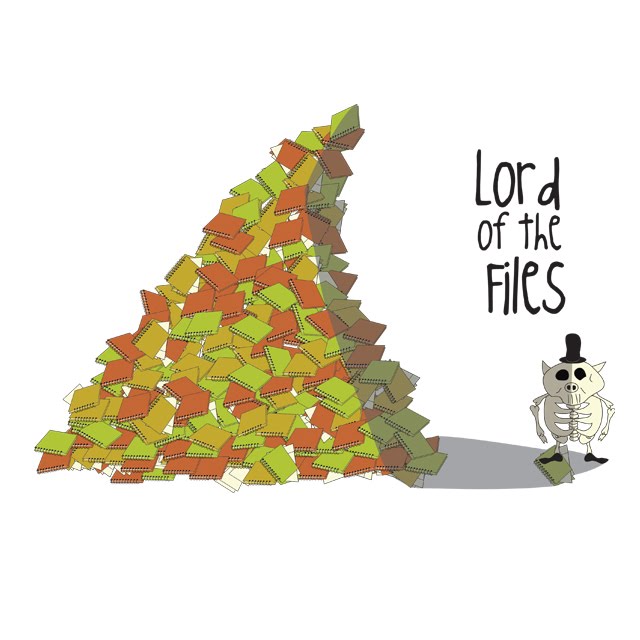
The Lord of the Files

In the late 1950s, office stationery across the world was plagued by an evil force...
...that was born of a typo.


Subscribe to:
Posts (Atom)